
And I said, This is my infirmity:
but I will remember the years of the right hand of the most High.
I will remember the works of the Lord: surely I will remember thy wonders of old.
I will meditate also of all thy work, and talk of thy doings.
Thy way, O God, is in the sanctuary: who is so great a God as our God?
Thou art the God that doest wonders:
thou hast declared thy strength among the people.
Thou hast with thine arm redeemed thy people, the sons of Jacob and Joseph. Selah.
Psalm 77:10-15
Psalm 77 give us an inside look into a man wrestling with his faith in the midst of devastating loss. This psalm is one in a group of ten called the “Asaph Cluster” which voices the anguish of Israel’s seventy-year exile in Babylon. This man was not only mourning a national tragedy – he was grieving because his family, his home, and his freedom were no more.
During his disturbing sleepless nights, the psalmist considered the days of old. He remembered his songs in the night. He conversed with his own heart and his spirit desperately searched for answers. In doing so, he threw out six questions. His inquiry, and the uncomfortable possibilities it entertained, was not to anyone in particular. The questions were his way of dealing, not only with the anguish – but also with the “why,” of his loss.
Asking these questions was not sin – it was weakness.
His soul was rubbed raw with an anxiety and loss that pushed his emotions to their limits. The past weighed him down, the future looked dark and he was in despair. But, in his weakness, he made a decision. The New International Version renders verse 10 this way:
Then I thought, “To this I will appeal:
the years when the Most High stretched out his right hand.
The Choices
The psalmist responded to the six questions of despair with four “I wills” – an plea to the inspired history of God’s word. These four choices he made became the hinge upon which the door of his soul finally opened – allowing the light of hope to shine in.
- To this, I will appeal: the years when the Most High stretched out his right hand. (NIV) God’s right hand is a picture of strength and victory. It is also the hand of salvation. (Psalm 20:6; 98:1; Isaiah 62:8). Like a beggar, frail and sick, the psalmist makes his appeal. It was an appeal to a similar situation – a previous captivity where God’s mighty power was seen.
- I will [solemnly] remember the deeds of the Lord. (AMP) Bible stories, as mighty as they are, can become stale. They can become almost like fairy tales if we do not make the effort, from time to time, to solemnly remember them as events that actually happened. Later in the psalm (verses 16 – 20) we see the story the psalmist was remembering was the Exodus. This is why God instituted Passover – to ensure Israel solemnly remembered, year after year, that this mind-blowing event actually happened. It is also why we, as Christians, observe the Lord’s Supper – to solemnly remember how that same Most High sent His Son to become the Lamb of God on our behalf.
- Yes, I will [wholeheartedly] remember Your wonders of old. (AMP) The story of the Exodus is full of amazing events. The birth and childhood of Moses, the burning bush, the ten plagues, the death of all the firstborn of Egypt, the freeing of the Israelites, the parting of the Red Sea, and the destruction of the mightiest army on earth defy belief – but actually happened. While suffering the pains of exile and captivity the psalmist chose, in his despair, to believe they did and was inspired to live his life accordingly.
- I will ponder all your work, and meditate on your mighty deeds. (ESV) The psalmist chose to ponder Elohim’s deeds instead of the deeds of his captors. To ponder means to murmur, moan, or growl as one might do while thinking deeply about a subject. It is the process of using your imagination to probe into the revealed truth. The man in this psalm chose to use his imagination to explore all God had to do to accomplish the Exodus – from orchestrating the multitude of small events that had to happen (i.e.: Pharaoh ordering the death of all Hebrew males to his own daughter finding – and therefore saving – Moses among the reeds) to the incredibly huge event it would take to divide a sea so a whole nation could cross its dry bed between two huge walls of water. It opened his eyes to see God’s hand working, even through tragedy, to bring about the salvation of His people.
As he made these choices, his agony gradually alchemized into worship. Before, the psalm was a soliloquy about reconciling faith with his circumstances. After receiving a fresh revelation of God and His plans, the psalmist realized his circumstances, as bad as they were, were orchestrated by God for a purpose and he was brought to a double epiphany about the way God works.
The first epiphany? “Your way O God, is holy” (ESV). Your way is different, set apart from the ways of other gods. Your way is different from the way others would advise. Your way is different, much higher – and infinitely better – than the way I would want to take myself (Isaiah 55:8 – 13).
At this point, he asks another question, which is really a declaration – “Who is so great a god as our God?” This brings us to a Selah, an invitation to stop and think about that for a minute or two.
You are the [awesome] God who works [powerful] wonders; You have demonstrated Your power among the people.
You have with Your [great] arm redeemed Your people, The sons of Jacob and Joseph. Selah.
Psalm 77:14,15 (AMP)
So let’s take some time to pause and consider the verses leading up to this Selah as well as the verses after. When we struggle to reconcile our faith with our circumstances – what are our “I will’s?” Are they similar, to the psalmist’s? Once he made these choices, God’s redemptive purpose gradually became clear, and when it did, the psalmist was able to trust Him again.
In the midst of the last five verses (Psalm 77:16 – 20), the writer receives a second epiphany about the difficult paths he was walking.
“Thy way is in the sea” (vs. 19). It was not the flowered path of a garden, nor a paved lane in a park. It was not on a busy sidewalk of a city, with all of its allure, nor a trail through a beautiful forest. His way was through the sea – the dark, turbulent, and treacherous sea. Why did God take them through the sea? To redeem them, to bring them out of slavery. What happened in the sea? They were delivered and their enemies were destroyed. They were able to see His power in a way like no other.
He takes us through these “holy seas” for the same reason, whether as an exile or as a widower – to see His power and learn His ways.
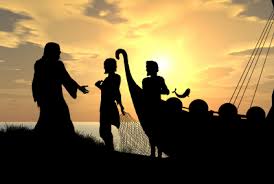
Note: There is a great series called “The Chosen” (a TV series about the life of Jesus and His disciples). the Season 3 finale (episode 8) illustrates Psalm 77 in a very real way. You can see it here or watch it on Amazon Prime.



 Musings of a Follower
Leave a comment